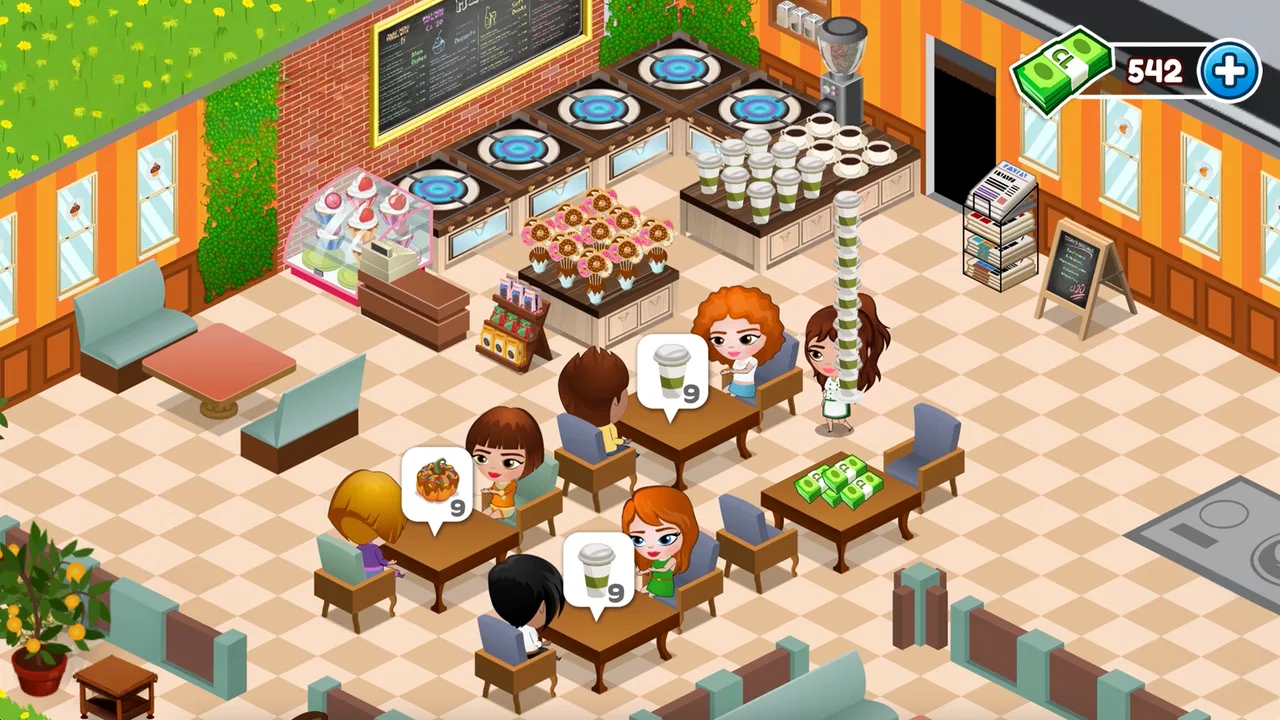
Cafeland - Restaurant Cooking
- 4.6
- Rating
- 10.00M
- Installs
- Free
- Price

 Analysis by App-foxy
I first approached Cafeland - Restaurant Cooking as a quick cooking game, but it soon became clear that its appeal is broader. It combines restaurant management, decoration, food preparation, and the steady satisfaction of improving a place over time. I can open it for a short session when I have a few spare minutes, or stay longer when I feel like rearranging the café and working through several tasks.
That flexibility makes it particularly interesting on a shared household device. One person may enjoy choosing the look of the restaurant, while another may care more about keeping dishes moving and expanding the business. The game is free to start, rated Everyone, and developed by GAMEGOS. Its large player base is reflected in an average rating of 4.6 from around 1.1 million ratings, with over 10 million installs.
How Cafeland fits into everyday shared use
The easiest way to understand the game is to imagine a café that gradually becomes a shared project. I can prepare food, collect the results, improve the restaurant, and then spend time making the space feel more personal. That mixture gives the game a different rhythm from a pure time-management title, where the main goal is simply to serve customers as quickly as possible.
You May Also Like

 Blood Strike: 2.5 Anniversary
Blood Strike’s Loadouts Turn Every Drop Into a Tactical Gamble
A close look at Blood Strike’s custom loadouts: how fast access to signature weapons reshapes its battle royale rhythm, rewards preparation, and narrows the gap between fights.

 Pandora - Music & Podcasts
Pandora’s Music Is Easy to Start, but Harder to Recover
Pandora’s strength is its low-effort path from a seed to a station. Its weak spot is how much confidence it asks you to place in connection, setup, and quiet recovery.

 8 Ball Pool
 Is Built on Rivalries, Rematches, and Routine
A close look at the rivalries, rematches, shared routines, and unanswered safety questions that turn a quick pool match into a persistent mobile community.

 Samsung Music
’s Quiet Strength Is Playing What You Already Own
Its reach comes less from spectacle than from dependable access to a personal library. That simplicity is both the app’s strongest retention engine and its ceiling.

 AccuWeather: Weather Radar
AccuWeather Review: A Quick, Clear Forecast for Everyday Decisions
For everyday plans, the best forecast is the one you can understand quickly. AccuWeather makes rain timing, radar, and local conditions easy to act on, with a few trade-offs.

 Hill Climb Racing
Why Hill Climb Racing Still Turns Crashes Into One More Run
A tiny car, a bumpy hill and one more upgrade: Hill Climb Racing keeps resurfacing because its simple chaos makes every near-miss feel personal.
More From Our News Desk



For a household, the decorative side is useful because it creates a natural division of interest. Someone who does not care about optimizing every cooking cycle can still enjoy arranging the restaurant. Another player might prefer deciding what to prepare next or checking whether the café is ready for another round of activity. The game does not need everyone to enjoy the same part of it.
I found it works best when treated as a casual shared activity rather than a competitive family game. Passing the device around can be entertaining, but it also makes the restaurant’s direction less consistent. One person may create a carefully planned layout, while another moves things simply because a new decoration looks attractive. That is not a serious problem, although it helps to agree on whether the priority is appearance, progress, or experimentation.
A realistic use case is a short break at home. I might open the game while waiting for dinner, collect what is ready, start another cooking task, and leave the café in a better state before putting the phone down. Later, someone else can look at the restaurant and decide whether to continue the practical work or change the design. The game supports this stop-and-start habit better than a title that expects one uninterrupted session.
What makes the restaurant feel personal
The strongest part of the experience for me is the combination of management and decoration. A restaurant is not just a menu or a timer; it becomes a little space that reflects the choices I have made. Changing the arrangement can make the café feel fresh even when the underlying routine remains familiar.
That visual freedom also creates a trade-off. Decorating can be more immediately enjoyable than handling the less glamorous management work, but focusing only on appearance can make progress feel slower. I get more from the game when I alternate between practical improvements and creative changes instead of spending everything on one side.
One useful habit is to make a small plan before changing the layout. I decide whether I am trying to improve the restaurant’s look, make the space easier to understand, or simply use a new item. Without that pause, it is easy to keep rearranging things without feeling that the café has actually improved. This is a small distinction, but it makes the decoration system feel more purposeful.
Starting on a device used by more than one person
Before anyone else plays, I would establish who is responsible for the restaurant’s main decisions. The game is built around an ongoing café, so random changes can matter more than they would in a collection of separate mini-games. If several people use the same device, agreeing on a basic rule—such as asking before making major changes—avoids unnecessary frustration.
This is especially important when one player enjoys visual design and another is trying to manage progress efficiently. Neither approach is wrong, but they can pull the café in different directions. I would also make sure younger players understand that a change made in the restaurant may affect what the next person sees. That simple explanation is more useful than assuming everyone will naturally play in the same way.
Because the game includes in-app purchases ranging from $0.99 to $99.99 per item, I would treat payment boundaries as part of the setup conversation. A free download does not mean every optional purchase is free. On a shared phone or tablet, the person who owns the device should review the purchase arrangements before handing it over, particularly when children may be playing.
I would not describe this as a game that requires a complicated household system. It does, however, benefit from clear ownership of the restaurant and clear expectations about spending. Those boundaries protect the fun part of the experience: decorating, cooking, and improving the café without turning every session into a discussion about what changed.
Coordinating progress without taking over
The best shared approach is to give each player a role without making the arrangement feel like work. One person can focus on the restaurant’s appearance, another can handle the practical side, and both can review the result together. This works because the game has enough variety to support different interests without forcing every player into the same routine.
I would avoid assigning rigid shifts. A casual game can lose its charm when it starts to feel like a chore list. Instead, I prefer a loose agreement: make sensible changes, leave the café in a usable state, and mention anything important before another person takes over. That keeps the restaurant coherent while preserving the relaxed nature of the game.
A particularly helpful workflow is to finish a session at a natural stopping point. I collect what is ready, begin the next useful action, and avoid leaving the restaurant in the middle of a major rearrangement. The next player can then understand what is happening immediately. This is more considerate than simply closing the game after making several unexplained changes.
Another practical tip is to separate experimentation from long-term decisions. If I am unsure whether a new arrangement works, I test it briefly instead of rebuilding the entire café at once. That reduces the risk of creating confusion for another household player and makes it easier to return to a familiar layout if the experiment is not successful.
What younger players and adults should expect
The Everyone rating makes the game approachable for a broad audience, and the cooking theme is easy to understand. Younger players may enjoy the colorful restaurant-building side, while adults may appreciate the gentle management layer and the ability to make gradual progress. The combination is friendlier than a game that depends on complicated rules or a serious competitive environment.
Still, an age rating should not be confused with a complete household recommendation. The presence of optional purchases means adults should explain what can and cannot be bought on a shared device. I would also encourage parents to play alongside younger children at least at the beginning, not because the game is difficult to understand, but because shared play makes it easier to explain the restaurant’s routines and spending expectations.
Trust matters here because the café persists as an ongoing project. A child who changes the decoration is not doing the same kind of thing as a child who spends money, but both actions can affect the household experience. A short conversation about permission and responsibility is enough to create a healthier boundary than simply handing over the device and hoping for the best.
For adults, the main age-related question is not whether the game is suitable, but whether its pace matches their patience. Cafeland is comfortable for people who enjoy gradual improvement and repeated routines. It is less suitable for someone who wants a compact game with a clear ending after every session. The restaurant is designed to be revisited, so the appeal depends on enjoying continuity.
How the gameplay compares with other simulation choices
Compared with a straightforward cooking game, this one gives me more reasons to return after a dish or task is finished. The restaurant itself becomes part of the objective, so I am not only trying to complete the next food-related action. I am also shaping a place, deciding how it should look, and considering what kind of progress feels worthwhile.
Compared with a traditional city-building or business simulation, the tone is lighter and more accessible. I do not need to approach it like a spreadsheet. The café theme keeps the decisions understandable, and the visual side makes progress easy to appreciate. The trade-off is that players seeking deep economic planning may eventually want something more demanding.
It also differs from fast arcade cooking games. Those titles are often about reflexes, pressure, and completing a sequence before time runs out. Cafeland feels more forgiving and more persistent. I can enjoy the restaurant even when I am not chasing a perfect performance. If your favorite part of cooking games is frantic multitasking, this may feel too relaxed; if you prefer building a place over time, it is a better fit.
The game is therefore strongest in the middle ground between a restaurant simulator and a decoration-focused casual game. That blend is its identity, but it can also divide opinions. Players who want only one of those elements may find the other one gets in the way. I would choose it for variety, not for the deepest possible version of cooking, decorating, or management on its own.
Where the free model can affect the experience
Being free makes it easy to try, which is important for a game whose appeal depends on whether you enjoy its long-term rhythm. I can explore the basic experience before deciding whether it deserves regular attention. At the same time, optional purchases can change how some players think about progress, particularly if they are impatient with waiting or want to move ahead more quickly.
My advice is to decide early what kind of player you want to be. If the goal is relaxation, I would treat progress as something that happens gradually and avoid turning every attractive option into a reason to spend. If the goal is to optimize the café, I would still set a budget before making any purchase. The listed purchase range is wide enough that casual spending can become a meaningful household issue.
This is also where Cafeland may not suit everyone. Players who dislike free-to-play design on principle, or who want every useful option available immediately, should look for a paid game with a more fixed structure. The free entry is convenient, but it comes with the need for personal discipline around optional spending.
Version, device expectations, and daily comfort
The current version is 2.66.3, and the game requires Android 7.0 or later. That makes checking the device’s software version a sensible first step before trying to install it. On a compatible phone or tablet, the most important practical consideration is screen comfort: managing a restaurant and arranging its space is more pleasant when the display gives me enough room to see what I am doing.
I prefer playing on a device that is easy to hold for short sessions but large enough for decoration decisions. A smaller phone works for collecting and starting tasks, while a larger screen makes layout changes less fiddly. That distinction matters in a shared household because the same game can feel very different depending on whether everyone is using a compact phone or a common tablet.
I would also keep expectations realistic about continuity. This is not a game I would install for a single evening and judge solely by its opening minutes. Its value comes from returning to the same café, seeing the restaurant develop, and finding a comfortable rhythm between practical tasks and creative choices. If that sounds appealing, the gradual structure becomes a strength rather than a limitation.
My household verdict
After spending time with it, I see Cafeland as a good choice for households that want a friendly, low-pressure restaurant game with enough decoration to give each player a personal stake. It is approachable for the Everyone audience, easy to sample because it is free, and flexible enough for short visits. The strong average rating and broad install base also suggest that its blend of cooking and café management has connected with many players.
I would recommend it to a family or group of friends sharing a device only with simple boundaries in place. Decide who can make major layout changes, explain the purchase rules, and leave the restaurant in a clear state when finishing a session. Those small habits prevent most of the friction that can arise when an ongoing simulation becomes a shared project.
I would skip it if you want a purely competitive cooking challenge, a completely purchase-free experience, or a simulation centered on detailed financial strategy. It is not trying to be the most intense or realistic restaurant manager. Its appeal is the softer combination of preparing food, improving a café, and making the space feel like your own.
For me, that balance is what makes the game worth recommending. I can play it alone, but it becomes more memorable when different people contribute different ideas to the same restaurant. The best way to enjoy it is to treat the café as a shared creative project, not a race to unlock everything. With sensible spending limits and a little coordination, GAMEGOS’s cooking simulation offers an easygoing routine that can fit naturally into everyday household use.
FAQs for Cafeland - Restaurant Cooking
01What is Cafeland - Restaurant Cooking about?
Cafeland - Restaurant Cooking is a simulation game where you can build and manage your own virtual restaurant. Players get to design their café, cook various dishes, and serve customers to earn money and expand their business. The game combines elements of strategy and creativity, providing an engaging experience for food lovers.
02Can I play Cafeland - Restaurant Cooking offline?
Cafeland - Restaurant Cooking requires an internet connection to access all features and updates. While some basic functionalities might work offline, to enjoy events, social interactions, and updates, a stable internet connection is recommended. This ensures you don’t miss out on any limited-time items or collaborative events.
03Are there in-app purchases in Cafeland - Restaurant Cooking?
Yes, Cafeland offers in-app purchases that can enhance your gameplay experience. Players can buy virtual currency to speed up progress, purchase exclusive items, or get special decorations. While purchases can help advance faster, they are not necessary to enjoy the game, as regular gameplay can also unlock features over time.
04How does the social aspect of the game work?
Cafeland includes social features where you can visit friends’ cafés, send gifts, and participate in community events. Connecting with friends enhances your gaming experience by offering more opportunities for rewards and collaboration. It’s a great way to interact with a community of fellow players and exchange creative ideas.
05What age group is suitable for Cafeland - Restaurant Cooking?
Cafeland - Restaurant Cooking is suitable for players aged 12 and up. The game is designed to be family-friendly, with no explicit content. However, the strategic elements and in-app purchases mean that parental guidance might be advisable for younger players to ensure a safe and controlled experience.
Pros
- Engaging gameplay with diverse recipes.
- Customizable restaurant themes.
- Frequent updates with new content.
- Interactive community features.
- Offline play available.
Cons
- Energy system limits playtime.
- In-app purchases can be costly.
- Requires internet for updates.
- Occasional loading delays.
- Ads can interrupt gameplay.

Cafeland - Restaurant Cooking
Gallery